
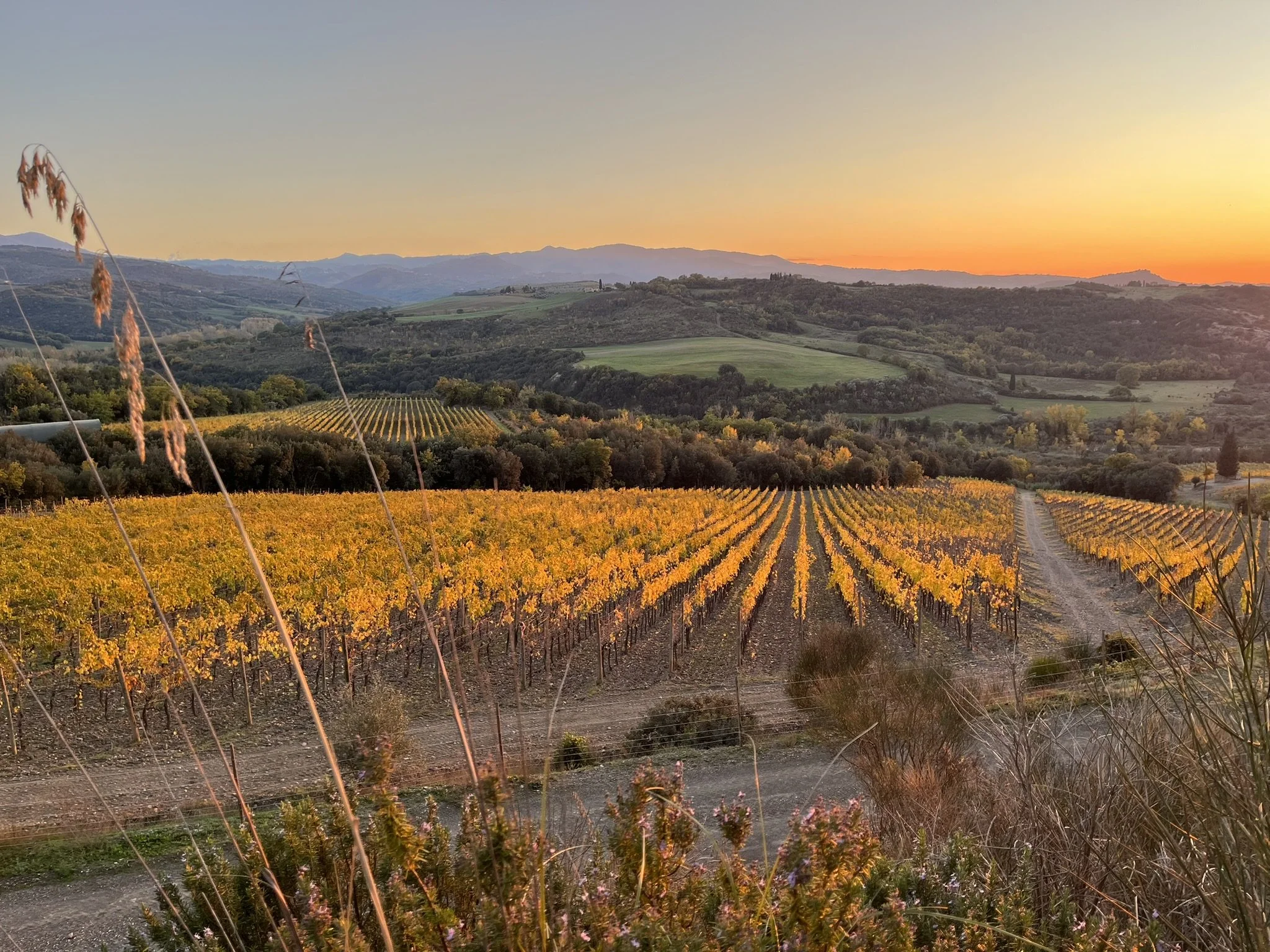
By no means definitive, partly because Italian wine law tends to change rapidly, this overview of Italian wine aims to encompass the big picture, setting out the boundaries of Italian wine and helping us understand the reality of Italian wine production from its more famous regions to little known ones, DOCGs, DOCs, and IGTs. It also includes a host of native and international grape varieties.
choose region on the map
Vintages
-
Item description
-
Item description
-
With 20-24% less produced, 2023’s 38-40 million hectolitres are reflective of the numerous challenges that producers faced over the growing season. Notably, excessive rain in late spring, that lead to a tough battle with Peronospora particularly in the south, and the heat that ensued in the summer months. This decline in production encompassed all of Italy. There was a 10% and 17% drop in Veneto and Piedmont respectively where initially, the northern regions were thought to have replicated last year’s levels of production. Overall, there has been a significant reduction in key wine producing regions, Tuscany (-30%), Puglia (-30%), Abruzzo (-60%), and Sicily (-45%) and average changes in production by zone show at -9.5% in the North, -29.5% in the Centre, and -38.2% in the South. Whilst producers experience the effects of a significant drop in production, the silver lining is that quality on the whole was very good. Generally, a very good year for Italy’s great whites.
-
50 million hectolitres (mhl) of wine were produced in 2022, a figure higher than the average of production of the previous 5 years. Very high temperatures and drought characterised this vintage though generally, despite previsions, quality and quality were maintained across the board due to more favourable conditions late on in the growing seasons. Higher altitudes and vines more resistant to drought – for example, older vines - certainly were key to quality in 2022.
-
A good, and in certain instances excellent, vintage that produced 44.5 million hectolitres (mhl), a 9% drop from 2020. Weather conditions varied greatly at a local, regional, and national level. Late frosts had a profound effect in some areas, especially in the centre north, and the extreme summer temperatures and lack of precipitation were particularly felt in the south, the north much less so. Valpolicella and Friuli claim a fantastic vintage whilst Tuscany’s was more challenging.
-
The 2020 harvest in Italy fared better than expected despite the challenges of COVID-19 with producers spending more time than usual in the vineyard. Italy's production remained steady compared to 2019, totalling 46.6 million hectolitres (mhl), slightly lower than 2019's 47.5 mhl. The growing season saw mild winter and spring conditions, with localized frost damage in late March. June and July brought cooler temperatures and increased rainfall in the north, while the centre and south had low rainfall in the peak summer months and experienced very warm temperatures. August and September saw high temperatures but not extreme. Localized storms caused damage, particularly in Piemonte and Veneto, notably in Soave and Valpolicella. However, classic production areas in Piemonte and Toscana are reported positive qualitative indicators.
-
With 44 million hectolitres produced, the 2019 vintage brought production levels back down to previous year’s averages. All regions saw a marked decline in production apart from Tuscany with a 10% increase. Generally speaking, a dry year with some sporadic and isolated rainfall. August saw lots of humidity coupled with high temperatures causing vigorous vegetative growth, so pruning was common practice. Notably, a later harvest than usual was beneficial for quality, particularly in the north, as vines enjoyed the idyllic dry and warm conditions of September and October – perfect for the reds. The result… a ‘Classic’ Barolo vintage which many are excited about.
-
52 million HL of wine and must were produced in Italy which is +24% on 2017. There has been an abundance of quantity compared to most recent vintages but quality is somewhat heterogeneous, with good for the most part and some areas of excellence but rarely truly outstanding. Generally speaking, a white wine year across Italy. 2018 is characterised by an abundance of humidity and dampness, especially in the early part of the growing season. The North, however, especially the Veneto and Friuli were very warm. The central and South suffered from especially from the mildews and dreaded botrytis.
A fresher style Nebbiolo from Piemonte and Sangiovese from Tuscany, with bright fruit and acidity. Time will tell if these wines develop into world-class wines.
-
Many in Italy described 2017 as the most bizarre year ever, climatically speaking. In April a wave of freezing temperatures brought frost to large parts of Italy, even as far south as Abruzzo, affecting the newly emerged buds in the most vulnerable areas. Large swathes of low-lying vineyards simply did not produce fruit causing one of Italy’s shortest vintages on record: 38.9 million HL, down 30% on the year before. Then, a long dry and hot summer, where vineyard soils were turned to dust. White wines suffered across the board. However, great vineyard managers were able to produce great red wine, despite difficulties. As temperatures soared, the plants shut down, and halted metabolizing acidity, bringing unexpected freshness to the better reds.
-
Outstanding.
-
47 million HL. of wine and must were produced which is almost 8 million more than 2014. The quality is overall very good/excellent in all Regions. The South registered a double figure increase in quantity, with Puglia up 30% and Sicily +25%. The quantity in the North also increased, averaging +10/+15 for Veneto, Trentino A.A. and Friuli. Only Piemonte and Lombardia confirmed last year’s numbers. July was one of the hottest in the last two centuries with peaks of 40 degrees even in Piemonte and Trentino. Rain had an important effect on the harvest in all parts of Italy giving good water supply that led to a regular vegetative growth, which resulted in a spring that favoured the phenological stages. The hot summer, mitigated only in the second half of August anticipated a perfect September and a homogeneous ripeness of the grapes. Diseases were only a distant memory this year, and so treatments were kept at low levels. According to AEEI the vintage was overall good, with peaks of excellence. Very good potential for wines.
-
40 million HL of wine and must were produced in Italy which is -17% on 2013. Quality is most definitely heterogeneous. The best of the quality will come from wines that benefitted from September and October. It has been a vintage full of surprise and disappointment. A mild winter with hardly any frost. An early spring with budding occurring around 20 days earlier than usual. Veraison on the other hand was late due to constant rain and cool temperatures especially in the North. The south was partially saved by a dry August. Plus winds were rarely the dry westerly winds but rather southerly humid ones, with hail and thunderstorms frequently occurring causing local but intense damage. Mildew, downy and powdery, plus Botrytis were widespread. Spraying was extensive, as was the amount of selection and green harvesting. During September and October weather improved, winds had drying effect and vineyards dried out somewhat. The north and centre benefited most. The South very patchy. For grapes harvested after September less problems but many vineyards were affected with rot. Veneto was the most productive region. Veneto, Puglia, Emilia Romagna and Sicily produced 60% of Italy’s total production.
The old adage: BACCHUS AMAT COLLES prevails in the whole of Italy.
-
General Vintage in Italy
47 MHL produced nationally. 2013 nationally qualitatively and quantitatively a better vintage than 2011 and 2012 where august heat and continuing drought had caused viticultural difficulties. 2013 was a more classic year of less hot periods and cooler temperatures compared to 2011 and 2012 and a more normal harvest period had been earlier in the previous years. 2013 was also a year of high spring rainfall, much needed in dry areas.
Barolo, Piemonte
Production was 2% up compared to the average and 15% up on the previous years. Summer was fairly normal for the season, although heavy morning dews because of high levels of humidity had caused some excessive problems of peronospera and botrytis. September was very sunny with notable diurnal temperature differences, witnessing favourable phenolic development and halting problems from the humid conditions of the previous year. October was classically autumnal with warm humid conditions and intermittent days of very light rain and sunny spells. This effectively prolonged harvest dates in general which started on the 10th October and finished on the 25th. There was great excitement for Nebbiolo producers who immediately noticed the potential for quality. Fermentations were regular (2012 fermentations were noticeably shorter). Seen as a more classic vintage with good potential for ageing.
-
One of the poorest vintages in living memory in terms of quantity. Less than 40 million hls were produced. With many regions already experiencing a short 2011 vintage, the limited 2012 vintage has compounded this issue for some producers. Perhaps only Campania got off lightly;
Nebbiolos in Piedmont fared well with excellent quality fruit - albeit low quantities;
Tuscany suffered from high temperatures, drought and vine stress, affecting quality and quantity.
-
One of the shortest vintages in modern Italian production. In spite of this, quality was excellent for whites and reds across the board;
Nebbiolos in Piedmont produced some excellent fruit. Sangioveses suffered more from heat and vine stress, though some higher altitudes - such as Radda in Chianti, and higher elevations – such as north-facing vineyards in Montalcino produced some excellent wines.
-
Harvests beginning in September were jeopardized by challenging weather conditions, with sunshine and rain on alternate days leading to fears that fungus might set in;
Piedmont fared well, with many producers harvesting later than usual and some fruit even being picked in November;
Though wines may appear to have less structure, they appear to be more perfumed due to the longer harvests;
Montalcino only experienced light rainfall during harvest;
A hit and miss year - producers will be the distinguishing factor of excellence.
-
A wet spring, followed by an early and very hot summer. The long autumn produced some excellent results;
Overall good, with some outstanding areas for reds.
Nebbiolos in particular benefited from an extended autumn with ideal growing conditions – warm and dry;
Sangioveses are also lush but maintaining a backbone of acidity. Some of the best wines came from vineyards on higher altitudes.
-
An extremely wet spring and early summer causing concerns that peronospera and oidium may set in. However, a high temperatures moving into the end of the summer ensured improved quality;
Overall good, with some areas producing excellent wines;
Nebbiolos – though La Morra saw hail, it is nevertheless a vintage to watch. Initially, wines were tough but sweet fruit and more complex structures are emerging;
Sangioveses are a little uninspiring as hail and wet conditions produced some sinewy styles. By and large, the later the harvest date the better the wines.
-
Relatively extreme weather conditions, but nevertheless an excellent vintage;
Extreme temperatures during summer risked a replay of the 2003 heatwave-induced fiasco, but September’s extended autumn with ideal conditions for ripening saved the day;
Grapes harvested after mid-September are generally of excellent quality;
Nebbiolos seem a little extracted with higher levels of fruit and tannin but perhaps better for those preferring bigger styles;
Sangiovese are also a little “hot”. Very powerful fruit and the usual refreshing sour cherry acidity less evident;
-
An outstanding vintage in many areas, one of the best according to many, including Nicolas Belfrage MW. Particularly the case in central and northern regions, despite the unusually cool August;
An extended, balmy Autumn produced fine crops, notably in Tuscany and Piedmont;
Nebbiolos are fine, elegant andideal for ageing, developing outstanding complexity of bouquet yet maintaining structure and acidity. Homogenous quality levels across the region;
Sangioveses are also fine, especially in Montalcino. Outstanding complexity and length. Wines for the long run.
-
A tricky vintage for many: though it started so well, from late August onwards heavy rains made very difficult;
Some waited for the probability of an autumn flourish - but it never came;
Producers who picked earlier produced better vintages;
The Nebbiolos were particularly open and ready to drink early.
-
Overall an outstanding vintage in many areas. Dubbed ‘vintage of the Millennium’ by many journalists, certainly on a parr in terms of excellence with 2006 vintage;
Characterized by its moderate heat and rain, creating ideal growing conditions and producing exceptionally well-balanced wines;
Produced wines with a sufficiently supple structure to permit them to age well;
However some Nebbiolos and Sangioveses have been known to be fairly unpredictable in bottle. Sometimes too closed to show their real character. Wines for the long run.
-
The famous heat of 2003 was of no exception in Italy. Wines from this vintage were typically jammy, and lacking in finesse and acidity.
Some exceptions were noted where individual winemakers were particularly forward-thinking in their canopy management. Cooler areas and north facing vineyards fared better.
-
The rains and exceptionally cool summer were the story of the vintage;
Not a complete disaster as many top wines were declassified to their lesser denominations resulting in some excellent bargains;
A vintage now to avoid.
-
Overall an outstanding vintage in many areas. Probably one of the better vintages so far this Millennium;
Piedmontese wines fared spectacularly well.
-
Not a bad start to the millennium, although not a 5 star vintage;
Bizarre climatic variations of a very warm to hot spring but some sudden cool periods in the summer;
Some excellent Barolos - although perhaps nearing their drink by date sooner than usual.
-
A difficult year to judge and generalize;
Initially talked down because of a rainy start and very hot finish;
Piedmont and especially Tuscany have since heralded it a 5 star vintage.
Nebbiolos and Sangioveses still showing very well with good acidity and still some time to age and develop.
-
Another very good year for Tuscany and Piedmont although some Tuscan producers ultimately regretted leaving the harvest until October - as it was accompanied by heavy rains. Producers picking earlier were rewarded with a better vintage;
Barolo or Barbaresco faired much better.
-
Heralded as one of the best ever vintages in Italy. Prices will reflect this;
Perhaps tastes have changed since then as fresher, longer-lasting wines are more appreciated now. In the nineties there was a tendency to over-extract and over-oak.
-
A relatively cool growing season, but helped by a warmer period and harvest in Piedmont;
Some outstanding, elegant Nebbiolos and Brunellos were produced.